WESTERN ALASKA PARTNERSHIP

Coastal Projects

Nearshore Bathymetric Data Collection in the vicinity of Western Alaska Communities

8/1/2019

 
Nearshore bathymetry is a vital link that joins offshore water depths to coastal topography. Seamless water depth information is a critical input parameter for reliable storm surge models, enables the calculation of sediment budgets and is necessary baseline data for a range of coastal management decisions. Funding from the Western Alaska LCC resulted in the purchase of field equipment capable of shallow water measurements in rural settings, allowing collection of nearshore bathymetry around western Alaska communities.  The resulting vector data shape files of nearshore bathymetry for Gambell, Savoonga, Golovin, Wales, Shismaref, and Hooper Bay are available by following the link below. ​
​​Project ID: WA2012_18
Lead Investigator: Nicole Kinsman, Alaska Department of Natural Resources Division of Geological & Geophysical Surveys
Collaborators: Molly McCammon, Alaska Ocean Observing System
​Project Duration: 2012 - 2014

Read More

​​​​​​Leveraging Opportunity for Wave Buoy Data Collection

8/1/2019

 
Picture
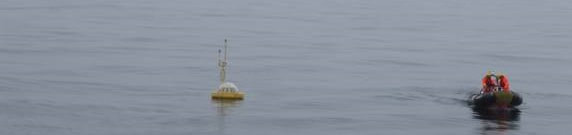
One of the major challenges in understanding changes in coastal processes in western Alaska is the lack of measured ocean data in the region. ​This project leverages existing human resources, and physical and computational infrastructure to collect and disseminate oceanographic observations in the Bering Sea. From instrument restoration, transport and deployment, through data streaming, recovery and dissemination, this project considers the end to end supports necessary to gather, promote, and serve oceanographic data along Alaska’s Western coast. 
​​Project ID: WA2012_17​
Lead Investigator: Molly McCammon, Alaska Ocean Observing System
Collaborators: David Atkinson, University of Victoria, Rob Bochenek, Axiom Consulting & Design
Project Duration: 2012-2014

Read More

​​The role of sea ice berm formation to alter environmental marine forcing in West Alaska coastal communities

7/31/2019

 
Picture

​Bering Sea storms introduce various environmental conditions that adversely affect human activity and infrastructure in the coastal zone and the ecosystems they depend upon. Storm impacts include interactions with sea ice in all potential states: large floes, shore-fast ice, and incipient sea-ice in frazil or slush state. In particular, sea ice can act to enhance or mitigate the impacts of adverse marine state, even as the event is occurring. 

​Project ID: WA2012_16​
Lead Investigator: David Atkinson, University of Victoria
Collaborators: Hajo Eicken & Craig Gerlach, University of Alaska Fairbanks
Project Duration: 2012 - 2014

Read More

Storm surge impacts on biological resources in the Yukon Kuskokwim Delta

7/31/2019


​
​The purpose of the research is to develop a storm surge model for the YK Delta area and to apply it to determine biological impacts of storm surges in the current and future climates. This research is needed as storm surges are expected to be more frequent and more severe in the YK Delta area due to climate change and sea level rise. The biological impacts in the YK Delta due to the changed storm surges could be extreme.
​Project ID: WA2012_15 ​
Lead Investigator: Tom Ravens, University of Alaska Anchorage
Collaborators: Sarah Saalfeld, Manomet Center for Conservation Sciences
Project Duration: 2012 - 2014

Read More

​​​​​​​​​​A high-resolution, integrally-coupled ice, tide, wind-wave, and storm surge model for western Alaska

7/31/2019


​The western coastline of Alaska is highly susceptible to coastal storms, which can cause coastal erosion, flooding, and have other pernicious effects to the environment and commercial efforts. The reduction in ice coverage due to climate change could potentially increase the frequency and degree of coastal flooding and erosion. Further, estuaries and delta systems act as conduits for storm surges, so when there is less nearshore ice coverage, these systems could introduce storm surge into terrestrial environments unaccustomed to saline intrusion, flooding, or other alien biogeochemical factors.
​Project ID: WA2012_14 ​
Lead Investigator: Robert Grumbine​, NOAA/NCEP
Collaborators: Joannes Westerink, University of Notre Dame; Patrick Kerr, University of Notre Dame; Andre van der Westhuysen, UCA at NOAA/NCEP; Hendrik Tolman, NOAA/NECP; Jesse Feyen, NOAA/NOS; Yuji Funakoshi, UCAR at NOAA/NOS
Project Duration: 2012 - 2015

Read More

​Climate Change Health Assessments for Three Coastal, Riverine and Lake System Communities

7/31/2019


​
​This project evaluates the connections between climate change impacts and health in Bristol Bay communities. Climate change impacts were assessed through the lens of public health, with an eye towards the potential effects on disease, injury, food and water security, and mental health.  Three focal communities were included in this assessment: Nondalton, a lake community, Levelock, a river community, and Pilot Point, a coastal community. The resulting assessment reports will be used to assist focal communities, as well as neighboring communities, in addressing climate-change related issues.
​​Project ID: WA2011_12 ​
​Lead Investigator: Susan Flensburg, Bristol Bay Native Association; Michael Brubaker, Alaska Native Tribal Health Consortium
Collaborators: Jennifer Skarada, Bristol Bay Area Health Consortium, Michael Knapp, Blud Skies Solutions, LLC; Izetta Chambers, UAF Alaska Sea Grant Marine Advisory Program
Project Duration: 2011 - 2014

Read More
Forward>>
Proudly powered by Weebly